
Make better engineering decisions, faster – with decision‑grade Finite Element Analysis (FEA) Modelling
Decision‑grade engineering insight for complex, high‑risk systems Andymus Consulting provides senior‑led Finite Element Analysis (FEA) consulting to support confident engineering and investment decisions for complex industrial assets and systems. We apply advanced structural, thermal, and multiphysics simulation to help asset owners, operators, and engineering teams validate designs, understand failure modes, extend asset life, and reduce technical risk.Unlike analysis‑only providers, our FEA work is framed around real‑world operating conditions, engineering standards, and decision‑making under uncertainty—not just producing plots, but delivering defensible conclusions.
Where we help – with Finite Element Analysis and more
Please contact Andymus Consulting to discuss your specific needs. We will be more than happy to discuss and propose a suitable approach for your requirements.
Tools we use
We utilise industry standard and commercially available and validated software. The packages we are familiar with include:
We also have experience in coupled analysis as such as Fluid-Structure-Interaction (FSI) modelling where the flow is modelled in Computational Fluid Dynamics (CFD) and coupled to a Finite Element Analysis (FEA) to replicate the flow and displacement of the bodies.
Methodology & Deliverables
We typically utilise these steps and generate the following deliverables:
- Scoping
problem definition, data checklist (CAD, loads, duty cycles, materials, tolerances, operating scenarios). - Modelling plan
modelling approach, non-linear vs linear modelling, element types, contact strategy, material models, boundary conditions, convergence criteria. - Verification & validation
mesh sensitivity, checks vs. hand calcs/closed‑form where applicable, and sensitivity to key assumptions. (This aligns with best‑practice FEA methodology.) - Presentation‑ready results
stress/strain/deflection, safety factors, buckling factors, mode shapes, fatigue life. - Decisions & design actions
clear recommendations, acceptance criteria, design changes, test plans, and (optionally) sign‑off notes for compliance documentation.
Applications
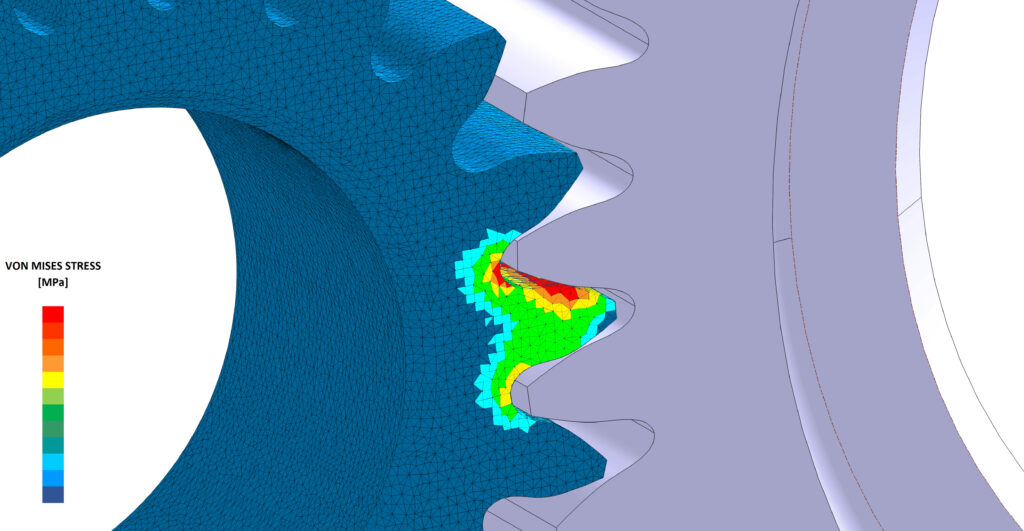
Machinery Analysis
Finite Element Anlaysis (FEA) can be utilised for contact of gears and rotating equipment to understand wear and resolve reliability issues
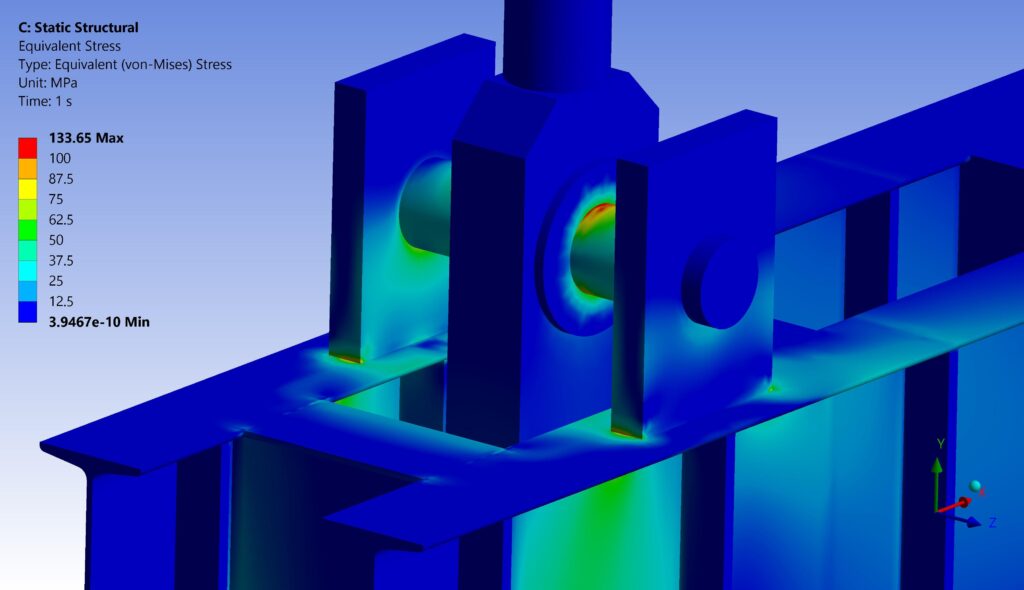
Structural Analysis
The assessment of structures is a common application for Finite Element Analysis (FEA). Contact, vibration and crack formation can all be analyses and improved designs tested before being subjected to real world loads.
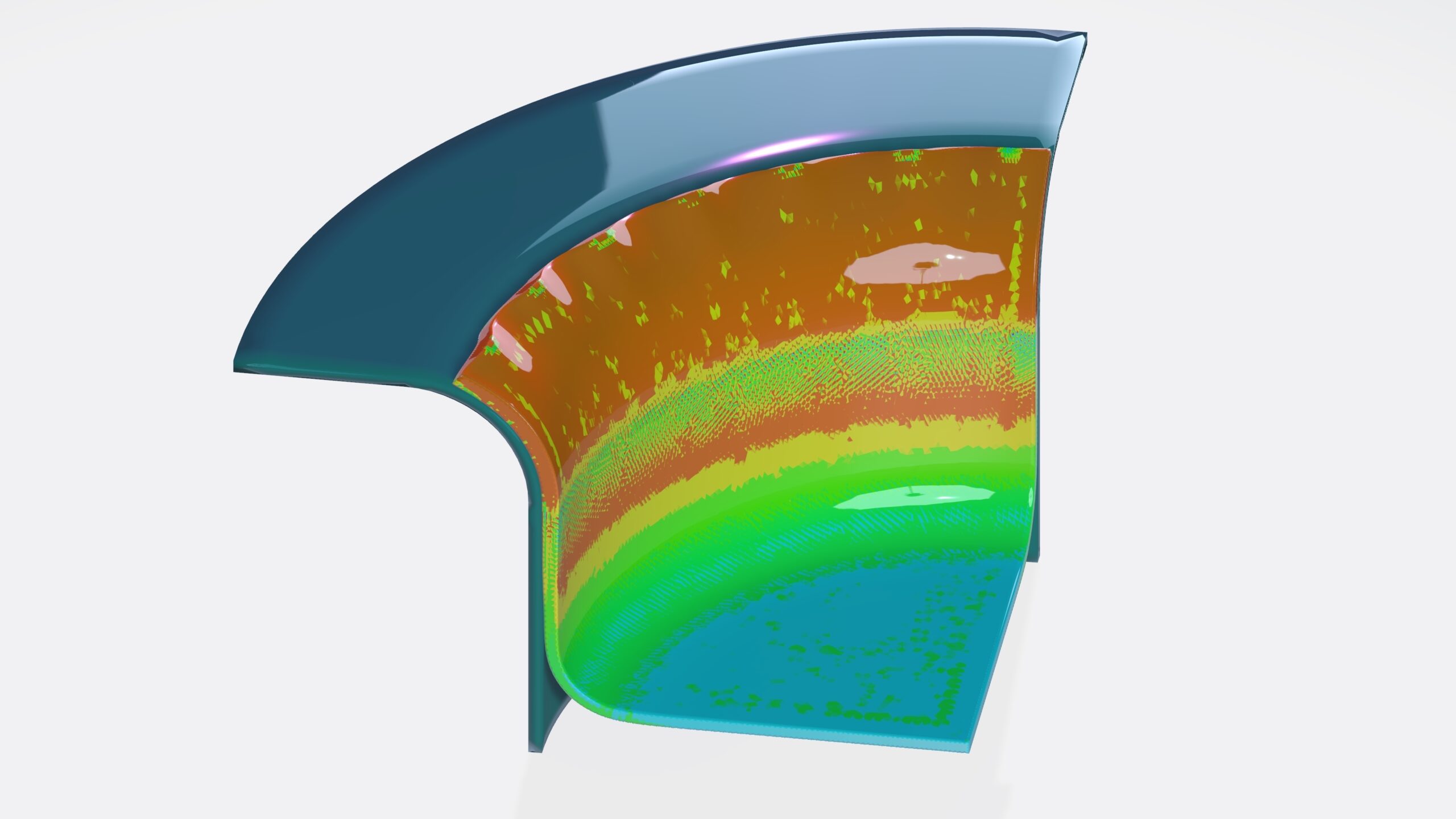
Manufacturing
Forming, construction and heat treatment steps can all be analysed utilising FEA to determine potential points of weakness, and optimising the design and manufacturing steps.
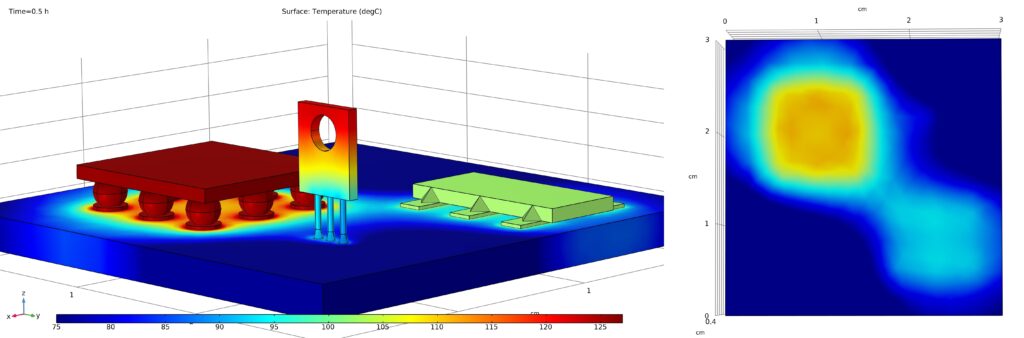
Electronics
Thermal profiles within electronic Printed Circuit Boards (PCBs) are an invaluable simulation for designers to understand the heat generation, dissipation and the stressed developed due to the thermal gradients in the assembley.
Our Specialist

Abdulla Toma
Principal Contract Consultant – FEA & Structural Integrity
Abdulla is a senior mechanical and structural engineer with 22+ years’ experience delivering finite element analysis (FEA), fitness‑for‑service, and structural integrity assessments across energy, resources, and industrial assets. He provides robust, defensible analysis to support asset life extension, remediation, and risk‑based decision‑making.
Case Studies
The following are examples of work involving Finite Element Analysis (FEA) modelling
Offshore, Subsea & Marine Structures
- FEED‑stage FEA assessment of offshore pipelines, including cold bending and in‑field installation conditions.
- Detailed finite element analysis of non‑conventional offshore platform joints to determine stress concentration factors for fatigue assessment.
- Structural assessment and design development of offshore platform support systems for compressor modules under installation and operating loads.
- Integrity assessment and strengthening design of offshore topside connections subject to uplift, storm, and operational loading.
- Structural assessment of riser clamp removal and mitigation configurations across in‑place, installation, and dismantling scenarios.
- Assessment and development of cracked offshore jacket leg joint repairs using grouting and clamping, including fatigue and crack growth analysis.
- Non‑linear explicit dynamic FEA of offshore boat landing structures and riser guards subjected to vessel impact scenarios.
- Assessment of offshore pipelines and structures subjected to seismic, installation, transportation, and fatigue loading, including pile–soil interaction modelling.
Energy, Power & Process Facilities
- Design and thermo‑mechanical integrity assessment of industrial reactors using transient and steady‑state heat transfer and stress analysis.
- Structural and thermo‑mechanical FEA of furnace and smelter components under operating, installation, demolition, and maintenance conditions.
- Buckling, stress, and vibration assessments of pressure equipment and process components in accordance with recognised design codes.
- Hydraulic surge analysis of fuel and process pipelines to assess transient pressures against allowable limits for modified operating scenarios.
- Non‑linear dynamic FEA of electrical conductors subjected to short‑circuit events to determine transient support forces.
Pipelines & Geotechnical Interaction
- Risk and integrity assessment of buried pipelines subjected to dropped objects, including detailed pipe–soil interaction modelling.
- Seismic ground deformation assessment of buried pipelines using non‑linear spring‑based pipe–soil interaction models.
- Structural assessment of combined buried and suspended pipeline systems under static and dynamic loading.
- Offshore pipeline lateral buckling analysis during installation using advanced FEA techniques.
Rail, Rolling Stock & Transport Systems
- Life‑extension stress and fatigue assessment of passenger train bodies, including full CAD development and detailed FEA.
- Root cause investigation of wagon and rolling stock structural failures using static, dynamic, and fatigue FEA.
- Structural assessment and fatigue life evaluation of locomotives and wagons under operational, crash, buckling, and dynamic loading.
- Design and development of rolling stock components including door mechanisms, anti‑climbers, fuel tanks, and crashworthy structures.
- Explicit dynamic multi‑body simulation and FEA of draft gear systems to investigate train parting events and develop mitigation solutions.
Mining, Heavy Industry & Materials Handling
- Root cause analysis of conveyor and crusher support structure failures using calibrated dynamic FEA and fatigue analysis.
- Structural assessment and mitigation design for heavy industrial frames and support systems subject to cyclic and dynamic loads.
- Design and structural assessment of specialised industrial equipment and prototypes for transportation, lifting, installation, and operational loading.
Advanced Analysis, Impact & Extreme Events
- Non‑linear explicit dynamic FEA for blast, crash, and impact loading on structural systems.
- Thermo‑mechanical coupled analysis for high‑temperature equipment and components.
- Fatigue, durability, and crack growth assessment of complex mechanical and structural systems using advanced FEA techniques.
Frequently Asked Questions (FAQs)
We will discuss the inputs required for a particular analysis during the proposal development process, although the typical information required includes the following:
- CAD Model(s) or the detailed design drawings
- loads
- materials
- service duty
- acceptance criteria
We utilise a range of options to ensure the quality of the results being reported through the use of the following steps
- mesh convergence
- verification vs. hand calcs
- peer review
- method references
We will utilise the appropriate standard for the work. Some of the applicable standards we would typically work under include:
- API 579-1 or ASME FFS-1 for Fitness for Service (FFS)
Finite Element Analysis (FEA) modelling is mandatory for level 3 asessments- Common for:
- Local thin areas (LTAs)
- Crack‑like flaws (via FAD approach)
- Complex geometry / load interaction
- Common for:
- ASME VIII, EN 13445, AS1210 Pressure Vessel Codes
- Finite Element Analysis covers design by analysis approaches where design by rule approach fails
- Common FEA checks:
- Primary membrane + bending stress
- Local plastic collapse
- Ratcheting
- Fatigue screening
- BS 7910 – Fracture Mechanics, Crack Assessments
- ASME B31.1 Power Piping, ASME B31.3 Process Piping, EN 13480
- FEA supporting code stress checks
- Complex stress intensification
- Local load cases (nozzles, branch connections)
- Expansion / flexibility where beam models break down
- High‑temperature / creep conditions
- Welded attachments
- Localised fatigue
- FEA supporting code stress checks
- API 650 Welded Steel Tanks API 620 Low Pressure Storage Tanks
- FEA commonly used for:
- Settlement assessment
- Local shell buckling, Nonlinear buckling
- Nozzle reinforcement
- Often paired with API 579 for damage assessments
- FEA commonly used for: